How We Perceive Ourselves: Identity Development
Refining a Cultural Approach to Multiracial Identity Development
This program examines how multiracial individuals represent race in the self, navigate multiple racial identities, and interpret ethnoracial experiences that shape identity development.
Current Projects
- Measuring the self-concept
- Navigation strategies and rites of passage
- Agency and communion in ethnicity/race-related experiences
Project 1 — Measuring the Self-Concept
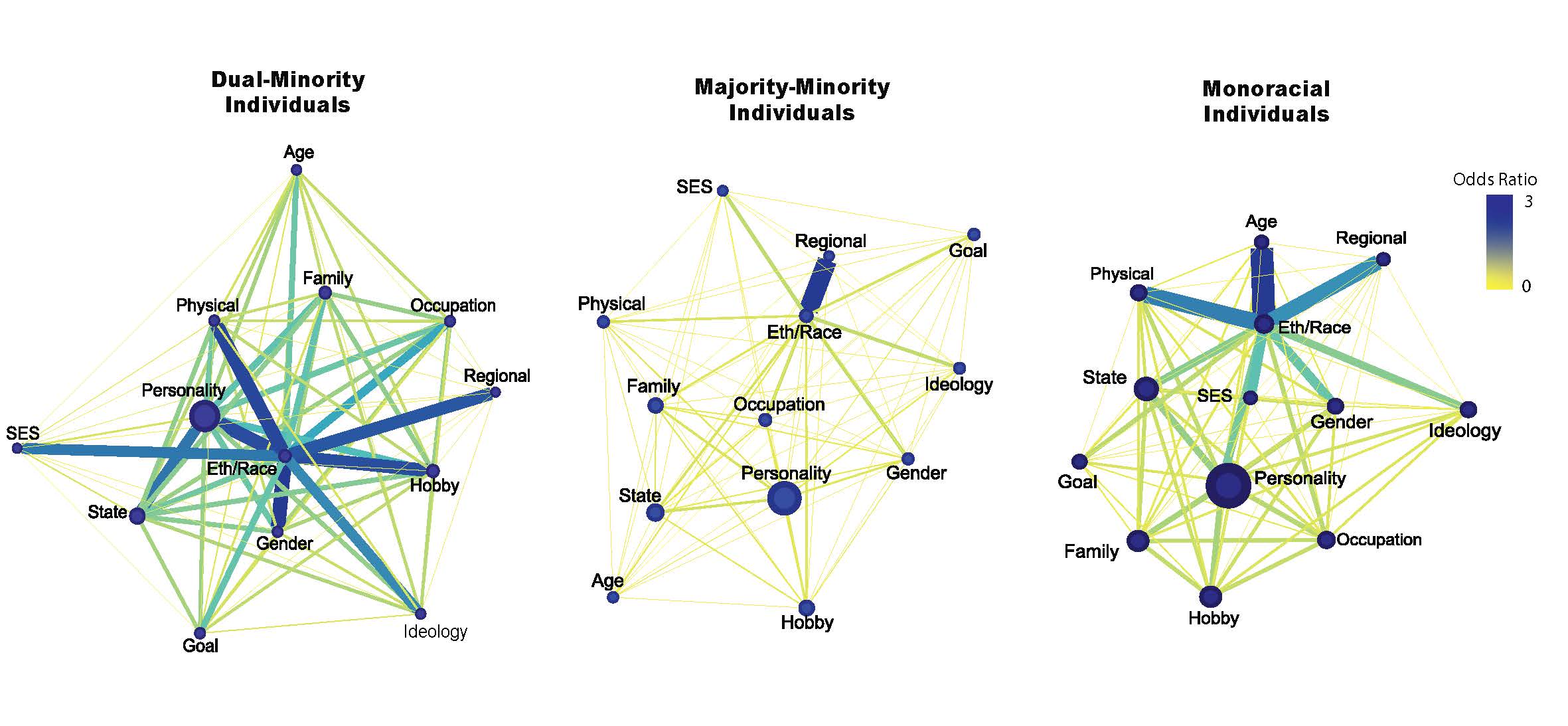
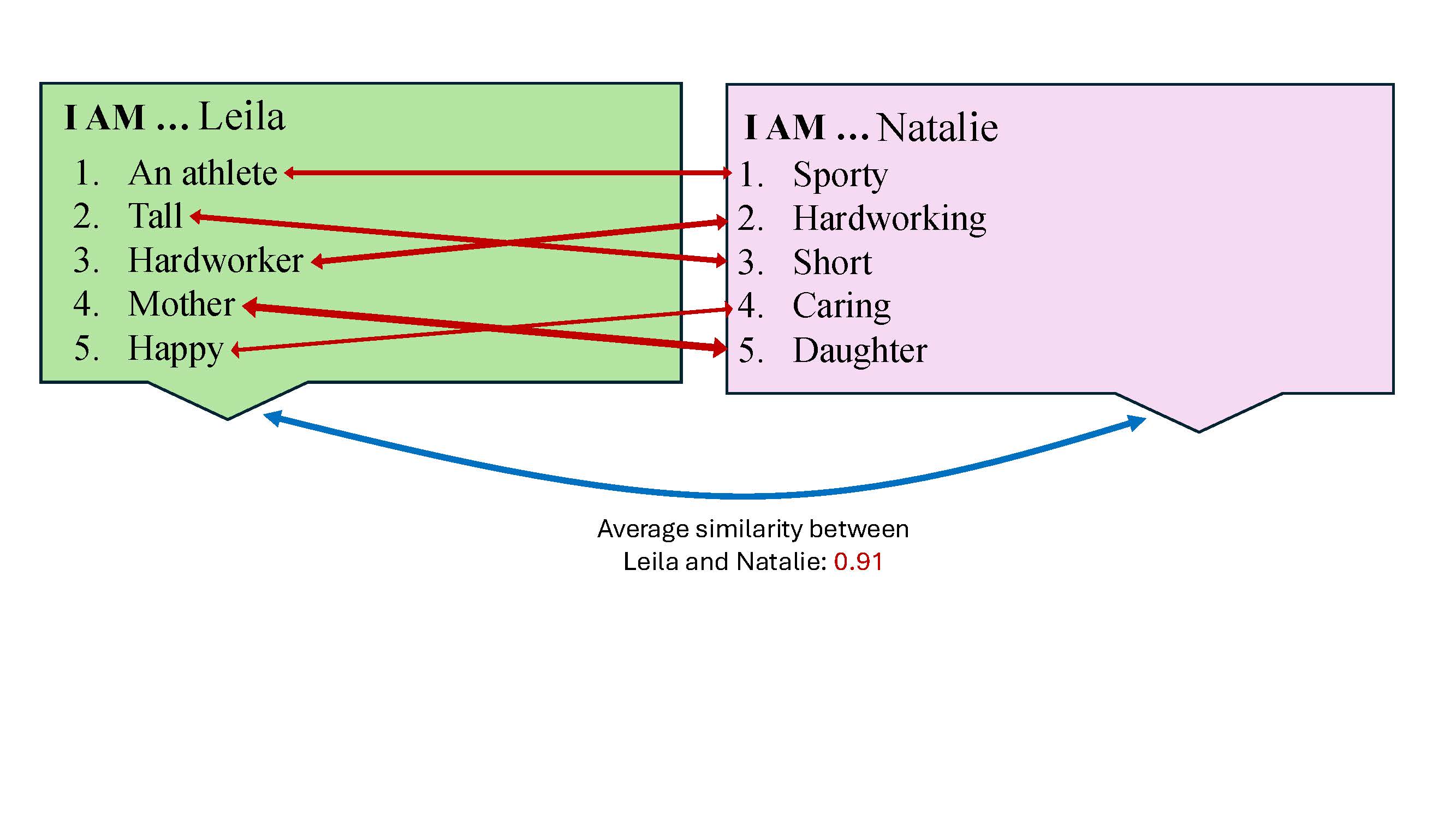
This project investigates multiracial self-concept through spontaneous self-definition. Participants generate open-ended self-descriptors, allowing identity representations to emerge without imposing fixed categories. This approach captures hybrid, culturally specific, and contradictory elements of the self that are often flattened in closed-ended measures. By modeling the content and organization of self-definitions, the study examines how multiracial identities are internalized and structured within self-concept. Manuscript under review (Jacobson-Salamatian, Benet-Martínez, & Weston).
Key idea: Self-concept structure reveals how identity is organized and navigated.
Project 2 — Navigation Strategies and Rites of Passage
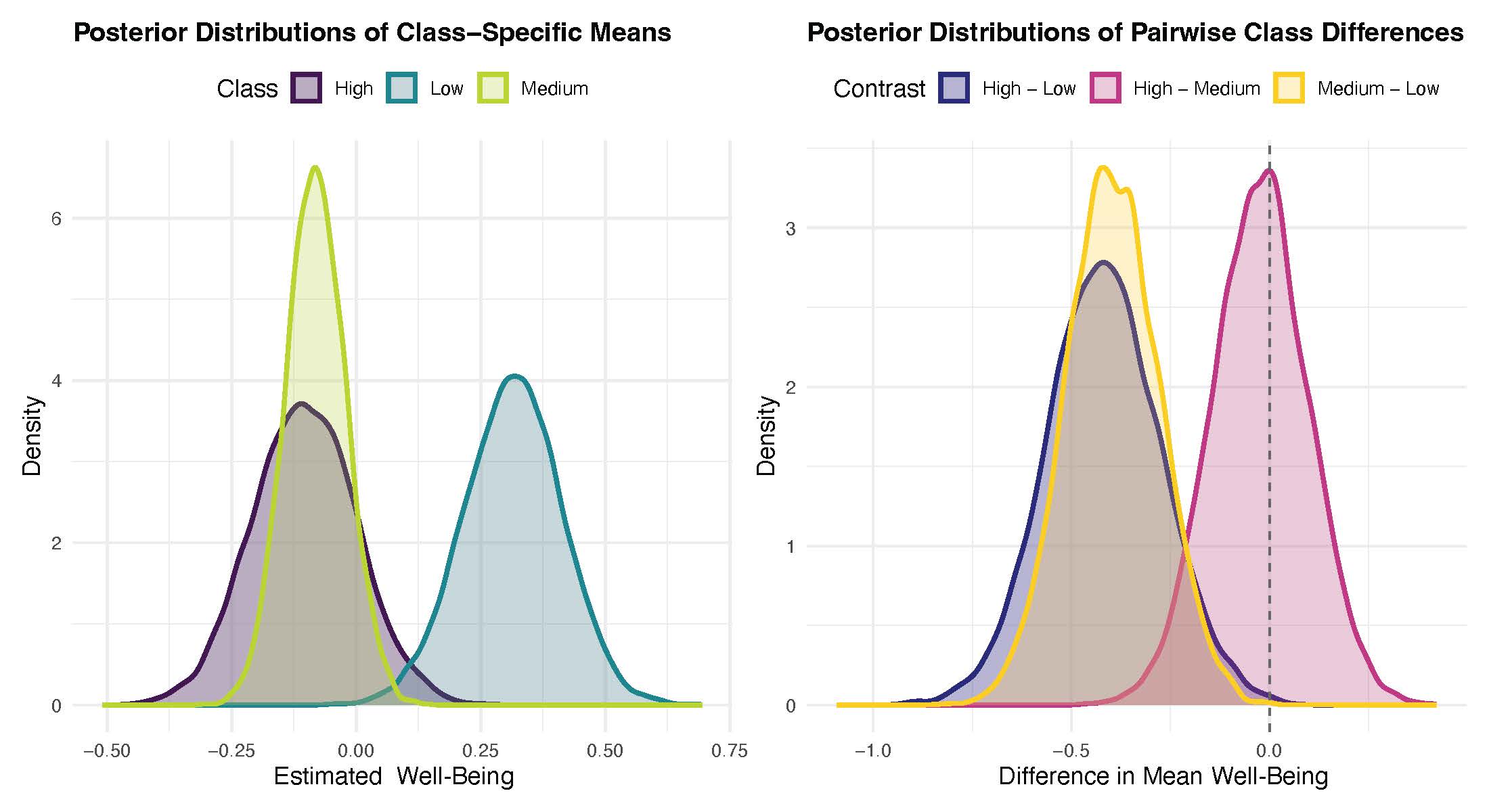
This project examines the strategies multiracial individuals use to navigate their racial identities. I study both global patterns of identity (how people approach their multiracial identity in general) and local processes (how identity is negotiated within a single life event that involves their multiple racial identities). Strategies include code-switching, decentering race, compartmentalization, cultural bridging, and other forms of adaptation.
Key idea: Multiracial individuals use strategies to navigate their racial identities, but some strategies may be more adaptive than others, depending on context and life stage.
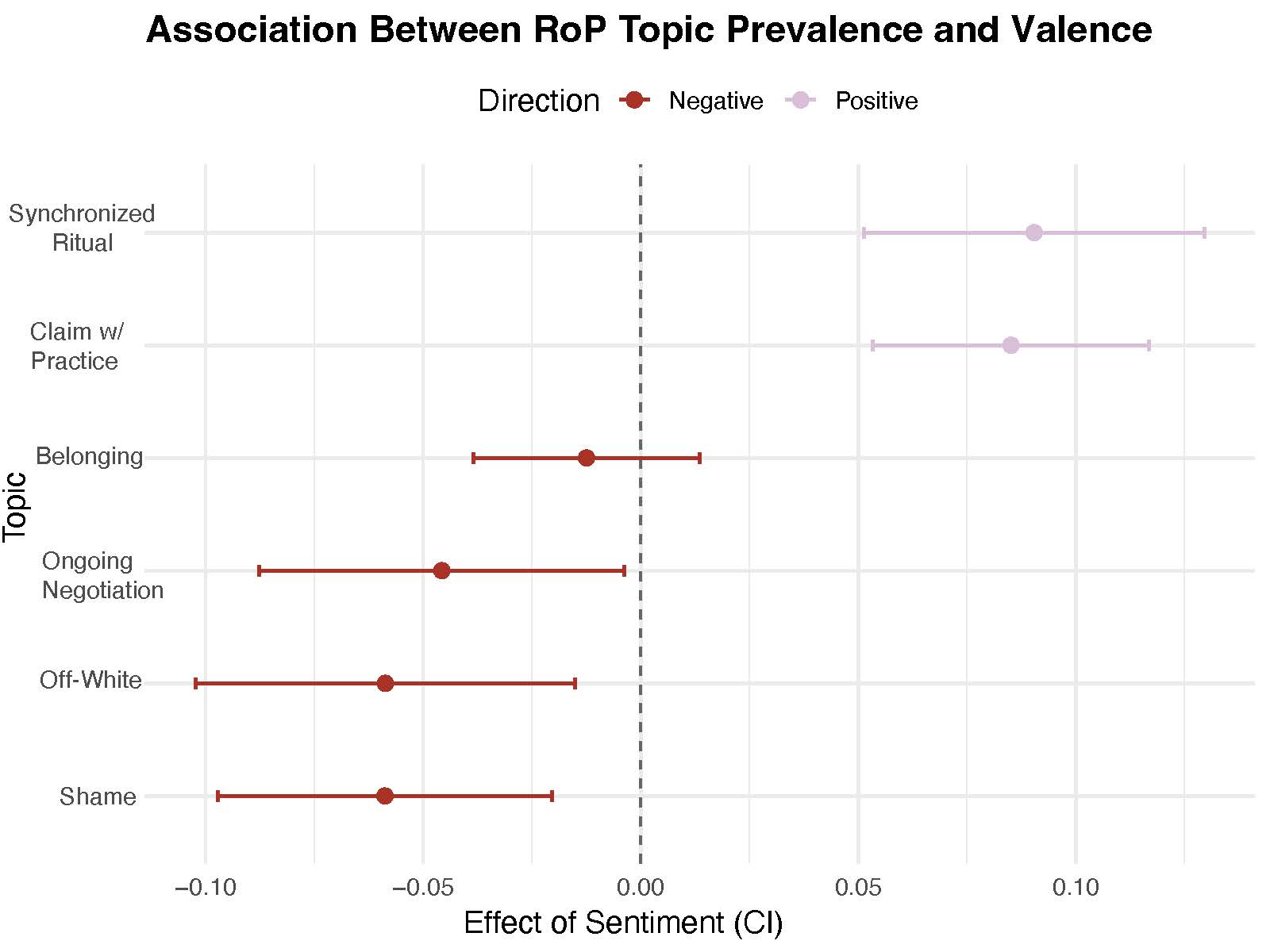
Project 3 — Agency and Communion in Ethnicity/Race-Related Experiences
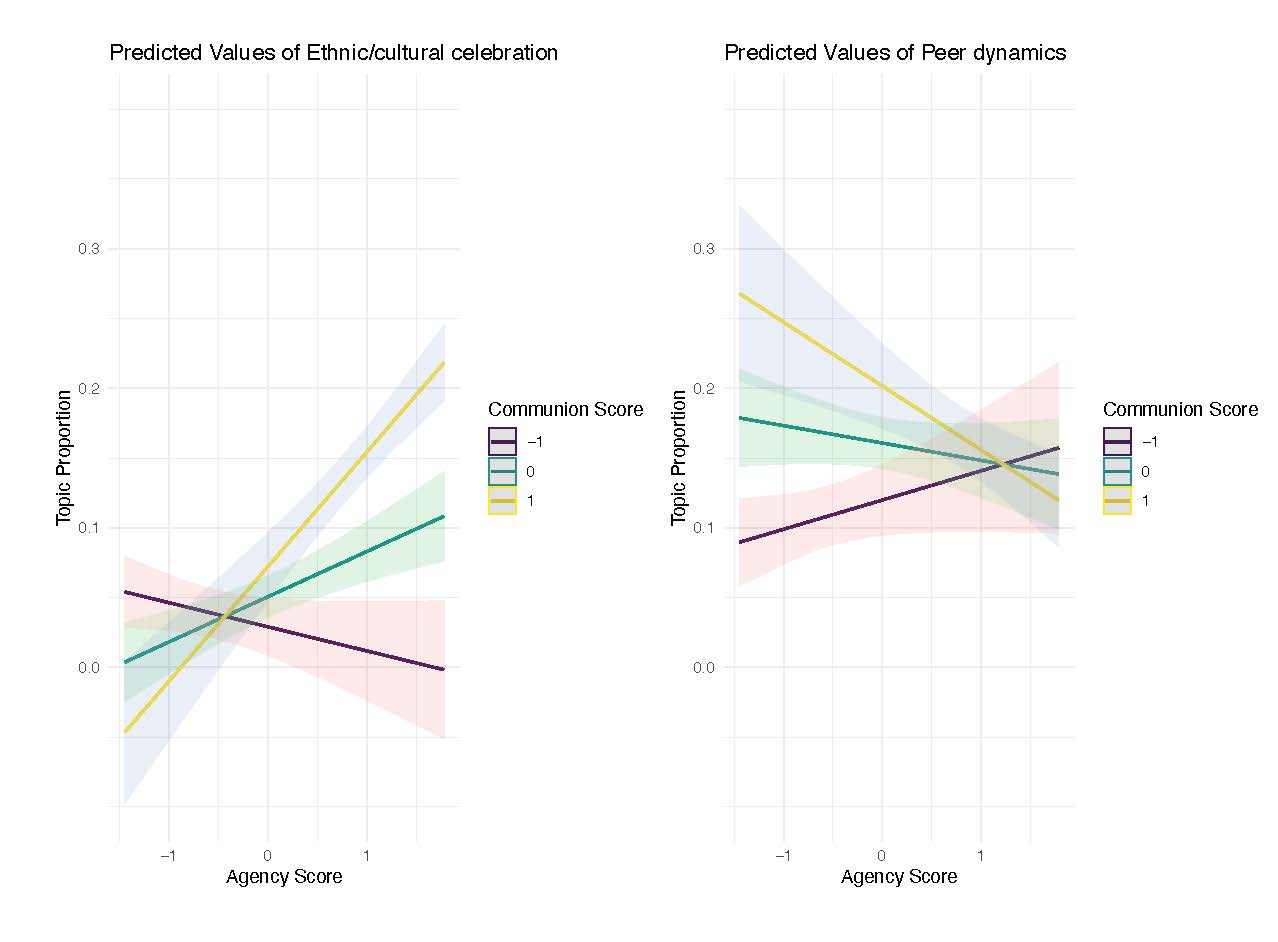
Most research on ethnic/racial identity focuses on how identity develops. Less attention has been paid to the content of ethnic/racial identity: the lived experiences and meanings that people associate with their ethnicity and race. Because these experiences are highly contextual and difficult to capture with traditional rating scales, this project analyzes personal narratives of ethnicity- and race-related experiences. I used Structural Topic Modeling (STM) to identify recurring themes in narratives from both multiracial and monoracial participants. This approach captures identity content inductively, revealing the kinds of experiences people describe, and how those experiences differ across racial groups. I then linked STM topics to human-coded motivational themes of agency (autonomy, self-definition) and communion (connection, belonging), testing how these motivational framings shape the way participants narrate race- and ethnicity-related moments. Published in Journal of Personality (Jacobson, Westberg, Chou, Syed, & Weston, 2024).
Key idea: Agency and communion dimensions structure how individuals interpret and respond to ethnoracial experiences.